Showing posts with label Tokyo. Show all posts

Saturday, January 27, 2018

Top 10 Olympic Opening Ceremony Failures

The Opening Ceremony of the Olympic Games is among the world's largest theatrical and artistic events.  This live event inevitably contained some of high-stakes moments that ended up in failure.  Let's take a look at the top 10 failures in Olympic Ceremony history!

And if you're interested in further information, please visit www.olympicceremony.org for more history about the Olympic Ceremonies.

Some of these videos may require you to view them on youtube instead of this blog.

10.  Tokyo 1964 - Perfume Explosion

At the opening ceremony in Tokyo, the cauldron entered the stadium carried by a survivor born in Hiroshima on the day of the Atomic Bomb blast.  For many in the stadium and as described by athletes in attendance, the cauldron lighting would be far more memorable not as the climatic moment we see on television, but they described it as a "perfume explosion" and "gas attack" when ceremony organizers decided to mass disperse chrysanthemum perfume to coincide with the entrance of the torch.


9. Rio 2016 - Where have all the athletes gone?

The Rio Opening Ceremony in 2016 was smaller in scale than the several prior games, but one oddity occurred after the athletes entered.  Many abruptly left!  Without volunteers to keep athletes in the middle of the stadium floor, the extremely long parade of nations left many athletes bored and tired leaving around 2,000 of originally over 10,000 to watch the end of the ceremony.


8. Athens 2004 - Hydraulic Lift

Bjork performed at the 2004 opening ceremony in Athens during the Dove of Peace segment.  She was to be raised by an hydraulic lift several stories above the athletes on the field while her skirt extended over the entire field where a dove would be projected onto it.  The hydraulic lift failed leaving Bjork awkwardly drowning in a mass of white curtains.


7. Los Angeles 1984 - Swarm of Athletes

As the torch entered the stadium in the 1984 Opening Ceremony in Los Angeles, the athletes weren't surrounded by enough volunteers and they swarmed onto the track impeding the torchbearer, slowing her down to a walk as she tried to round the track.


 6. St. Moritz 1948 - Sexism

The official video of the 1948 Olympic Games in St. Moritz included a male narator and a female commentator.  The video is filled entirely with extremely sexists comments especially during the lighting of the cauldron.

On the entrance of the Norwegians:
Female: "Look, they're still wearing the old style of trousers!"
Male: "Trust a female to notice that!"

On the entrance of the Italians:
Female: comments on the "handsome boys"
Male: scolds her for the comments and concludes, "you're very embarrassing"

On the cauldron lighting:
Male: "...and the Olympic Fire blazes up!"
Female: "Well it's nothing more than a gas burner!"
Male: "That, my dear, is a symbol.  But who could expect women to have an understanding of abstract things."


5. Albertville 1992 - Premature Cauldron

In 1992, the cauldron lighting featured a strange anomaly.  It was accidentally lit remotely slightly before the flame reached the cauldron.


4. Sydney 2000 - Mechanical Cauldron

Near disaster hit in 2000, when the cauldron was lit in water, rose above the torch bearer and became stuck for several minutes until a worker hit a straining bar, freeing the cauldron to rise up above the stadium.


3. Sochi 2014 - Asterisk

A devastating moment to begin Russia's massive ceremony, one mechanical ring failed to open, leaving the look of an asterisk.  An auspicious symbol for the criticism surrounding the bribing and doping scandals which would see Russian athletes banned from future games.  On Russian TV, the rings were shown to work perfectly, using video from dress rehearsals.


2. Seoul 1988 - Burning Doves

In 1988, the Olympic cauldron was placed in an unusual spot, alongside the track.  Before the lighting, thousands of doves were released, and conveniently, the edge of the cauldron provided the perfect place for the birds to perch.  When the cauldron was lit, the birds lit up in flames flying into the stands, falling upon the athletes below, and subsequently, live doves were banned from use after 1992.


1. Vancouver 2010 - Cauldron Failure

The biggest failure in the history of the Olympic Opening Ceremony must be the cauldron lighting in 2010 in Vancouver.  The cauldron was to be formed by four arms hydraulically controlled and emerging from the ground - one of the arms did not cooperate.


Sunday, July 15, 2012

1964 Tokyo Summer Olympic Opening Ceremony


The Games of the XVIII Olympiad
Tokyo, Japan
1964
Opening Ceremony of the 1964 Olympic Games in Tokyo

Olympic Ceremony Records
italics indicate records at the time
  • First Olympic Games in Asia
  • First Opening Ceremony Theme Song
  • First Use of Electronic Music
  • First Use of Balloons
  • First Use of Fireworks
  • First Release of Perfume
  • First Use of Sky-writing by Airplane
  • Most Nations Participating (93) - previous Rome 1960 (83)
  • Most Olympic Events (163) - previous Antwerp 1920 (154)
Olympic Torch Relay Records
italics indicate records at the time
  • First Olympic Torch Relay to be Run on the Track at the Ancient Stadium in Olympia, Greece
  • Longest Olympic Torch Relay - 27,065km (previous Melbourne 1956 - 17,412km)
  • Most Torchbearers - 5,244 (previous Helsinki 1952 - 3,374)
Opening Ceremony
National Stadium (71,600)
October 10, 1964

Video


Opening Ceremony Highlights
Up until 1964, the most influential Olympic Ceremonies were the games of 1896, 1912, 1936, and the 1956 Equestrian Games.  The Games of Tokyo in 1964 shattered the glass ceiling and certainly along with 1936 should be described as the first examples of the Olympic Ceremony as an art form.  The ceremony featured fireworks for the first time, an enormous release of balloons (also a first), the first performance of an electronic music score in an opening ceremony performed for the entrance of the Emperor, jet planes created the Olympic Rings in sky-writing, and even the cauldron lighting moment became an incredible artistic moment as a boy who was born in Hiroshima the day the atomic bomb was dropped on the city lit the Olympic Cauldron to an amazing dispersing of chrysanthemum perfume covering the entire stadium as the torch was rounding the track.  Tokyo made a giant leap forward in the artistic elements surrounding the ceremony, and within a few decades, the Olympic Opening Ceremony would become the largest live artistic performance in world history.

  • Olympic flags and flags of all the participating nations hoisted on poles on top of the stadium
  • Electronic music fanfare; Emperor and dignitaries arrive at the stadium
  • National Anthem is performed by orchestra
  • Parade of Nations
  • Coubertin's speech played in 1936, broadcast at the stadium (Olympic report incorrectly states that Coubertin was speaking at the 1936)
  • Emperor of Japan declares the games open
  • Olympic Flag carried into the stadium to the Olympic Fanfare and Olympic Hymn
  • "Antwerp" flag, carried by Mayor of Rome proceeded by children's drum band, given to the Mayor of Tokyo
  • Canons fire; 12,000 balloons released
  • Olympic Torch enters the stadium; Perfume Released; Olympic Cauldron lit by Yoshinori Sakai (born in Hiroshima August 6, 1945 - the day it was leveled by an atomic bomb)
  • Tokyo Olympic Games anthem performed by chorus and orchestra
  • Athlete's Oath
  • 8,000 pigeons released
  • National Anthem is performed by chorus and orchestra
  • Jet planes make the five Olympic rings in sky-writing

Photos
Gold Medal from the 1964 Tokyo Olympics
The 1964 Tokyo Olympic Torch
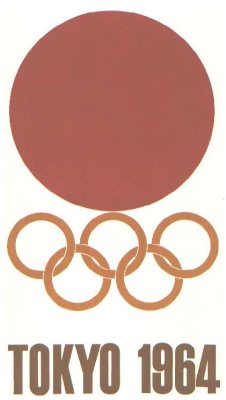
Official Poster of the 1964 Olympics in Tokyo

View of the Olympic Stadium in Tokyo during the 1964 Olympic Opening Ceremony

The 1964 Olympic Cauldron in Tokyo

Wednesday, July 11, 2012

1940 Tokyo/Helsinki Summer Olympic Opening Ceremony


The Games of the XII Olympiad
Tokyo, Japan
1940

Helsinki, Finland
1940

Olympic Ceremony Records
italics indicate records at the time

  • Second Olympics to be Canceled (Tokyo: Sino-Japanese War, Helsinki: Russian Invasion of WWII)
  • First Planned Unrefueled Flight of the Olympic Torch (Berlin to Tokyo)
  • First Asia City to Win Election to Host the Olympic Games

Opening Ceremony
Tokyo Olympic Stadium (100,000)
Helsinki Olympic Stadium (70,000)

Video
No Opening Ceremony

Official Report - Tokyo


Report - Helsinki


Opening Ceremony Highlights
The Olympic Games of 1940 were awarded originally to Tokyo.  Their report is present above.  They planned on a monumental stadium of 100,000 and the games were to mark the 2,600 anniversary of the founding of the Japanese Empire.  Interesting elements were discussed such as taking the Olympic Flame along the silk road with horses to distant Japan from Greece, but they did not want to traverse China because of the Sino-Japanese War.  Then it was discussed moving the flame by boat, but the Germans suggested to fly the flame non-stop to Japan - further symbolizing the mythical creation of the Japanese people descending from the heavens.  Another interesting problem was that the Emperor's voice could not be transmitted or amplified because of its sacredness - so he could not declare the games open during the ceremony.  These problems were never met, because Tokyo quickly lost its right to host the games.

At the outbreak of the Sino-Japanese War, the games were taken away from Tokyo due to the many nations wishing to boycott.  The games were then awarded to Helsinki, Finland.  The Helsinki Games were to stage a 5,000km torch relay and the games were set to begin on July 20, 1940, but with the Russian Invasion of Finland and the Axis controlled areas during 1939 in WWII, the games were officially cancelled.  Much of the organization and stadia built by the Finnish government would help them win the host city election of 1952.

Photos
Poster of the 1940 Olympics in Helsinki

Poster of the 1940 Olympics in Tokyo

Poster of the 1940 Olympics in Tokyo

Featured Post

OLYMPIC CEREMONY DATABASE: Every Summer and Winter Olympic Opening Ceremony

The opening ceremony of the Olympic Games may be the largest art form in the modern world and certainly one of the rarest.  I provided all ...