Monday, October 24, 2011

Opera University: Auditions 101

I know that I am only 26, and am just beginning to see success in Auditioning.  Hopefully, this will be of some help to those of you out there who are just starting.  Of course this will be a series of posts - and like every great professor, I will assign some reading, and teach by assigning even more reading!

Welcome to Auditions 101!

(bell rings)

The class of fearful opera singers, leisurely talking, is interrupted by my grand entrance into the classroom.  Taking long broad strides, chest and nose properly raised to its correct smugness level, making sure as to never face away (upstage) of my pupils, I inhale with great intensity, as though I could change the future of the earth upon the uttering of my next words. "Good morning class," speaking with rude contempt towards consonants - angrily forcing them out, raining a shower of spit across the desks in the front row.  "Please open your text books to page (with great pause and theatrical anticipation) one", I proclaim.  The class, awkwardly looking slightly above me, pauses, and then obeys, once the supertitles on the power-point screen catch up.  These were opera singers after all.  And finally having the gravitas of Mephistopheles, I summon the lights to dim towards a deep blood-red, saturating the room.  "Attention class, your assignment today is to (smoke billowing, drums and bugles blasting in the distance, lightning and thunder clash, only to suddenly diminish to silence....the lights flickering back to blue-white...and in a mundane, Ben Stein-like voice I continue) read through chapter one."  The students, in total shock and confusion, slowly open their books.

(This is great, as a tenor, I never get to play the bad guy)

A Concise Survival Guide to Opera Auditions - First Edition
Chapter 1: The Most Dangerous Game

One of the most loved short stories in American History is Richard Connell's The Most Dangerous Game - a story about a man invited to go on a safari hunting expedition, but having lost his way, ends up finding refuge at a small inhabited island, where a wealthy aristocrat set up a private hunting colony. Unfortunately, he would find out, that he wasn't going to be hunting, but was to be hunted!  That's right, The Most Dangerous Game, are people! (in the end, the hunted killed the hunter!)

Fortunate or unfortunate as it may be, you are a person.  Once you get over that concept, you will be on your way to a great career in opera!

That's right, to be successful, you must embrace everything that it is to be a person - failure, stupidity, nerves, allergies...the whole package.  Also, you must acknowledge that you always are competing against other people in normal life - competing for attention, looks, praise, love, etc.  Whether you like it or not, that is how humans work.  You might as well embrace it.

But, how does opera fit in to this?  Well, to be successful in opera, you must be your best self to be able to successfully compete against other people for gigs at an audition.

Assuming you have had some great schooling, and can correctly sing, without any major technical issues, and that you naturally have a large enough voice to be competitive in the professional opera world, you should begin to consider auditioning for some opera companies.

One great resource is, yaptracker.com.  You should apply, pay the annual fee, and start reading through the several thousand auditions that are posted on their site.  If you are just beginning, you should seriously consider some pay-to-sings.  Obviously, you must pay to be a part of those programs, but eventually you will work your way up to apprentice programs and eventually to the professional world of mainstage productions. Read my previous blog post on Young Artist Programs if you would like more information on how the process works.

But, that is for another time.  For now, you must consider what it takes to live this opera lifestyle.  Opera is rough and tough.  No one is perfect, but you are always, always, always measured against perfection.  This is why it is good to remember who you are...a person.  It's ok to lose.  It's ok to fail.  It's ok not to be perfect.  On the other hand, you are "the most dangerous game."  And you, despite your deficiencies, can still win people's attention, love, and praise, and win an audition for the biggest roles out there.

So first thing is first:  you must have a good ego!  Some egos are more dominating than others...like Miss Piggy.  But, for all who love the Muppets, who is the real hero?...that's right, Kermit!


See, you don't have to have a nasty, humanity-crushing ego that tramples over everyone's mother and dog.  No, you just have to keep one that will help you shrug off all those negative things, and keep you in a fighting spirit.  You can only do your best...nothing more.  Sorry, but you will not be the greatest singer of all time.  However, you can still dream of the big time at the Met or La Scala, because thousands of singers who aren't the greatest of all time have sang there.

So if you are just beginning (still assuming that you have a pristine voice), get out there and apply to places.  Apply to everything!  Don't think it takes luck to make it big; you have to put yourself in the position to be lucky.  You will learn the most simply from experience.  And, like anyone who has cheated in a drawing before knows, if you apply a bunch of times, the chances are better that you will win one of those times.

With that said, and I can't say it enough, this is all assuming that you are an educated and hard working singer.  You first must know technique, music fundamentals, and several languages (in other words, go to school!).  Then you must learn opera rep.  Then you must practice it until you can sing it as perfectly as you possibly can.  And then you should you go out and show the world what you've got.

Keep in mind, there are thousands of other singers out there with big egos that are trying to be the most perfect and dangerous singer that they can be.  What are you going to do to compete with them?

(next time)

Chapter 2:
Self-Promotion - Reflections on Awful Superheroes

Skateman

Monday, October 17, 2011

Top 10 Strangest Musical Deaths

Last Tuesday, I almost died!  I was sitting in the Roman Bath at the Conservatory here in Kansas City, working on my Schenkerian analysis of a Beethoven sonata (Pathetique Sonata - appropriately!) and a gigantic fluorescent light bulb crashed to the ground and exploded with a fine dust of cancerous filament and gas just four feet in front of me.  My reaction, for some reason, was to cover my ears...way to go Evolution - it looks like I'm on the genetic losing side of reactionary survival instincts.  Thereby shocked into contemplating my own death, I decided to make a list of the 10 strangest musical deaths - all are not musicians, but all have a direct impact in music history.  I know there are many to chose from, but I have searched long and hard for these!

HERE IS YOUR FIRST AND LAST WARNING - GRAPHIC DETAILS AHEAD!!!

#10.  Mike Edwards (cellist) famous for his career with the Electric Light Orchestra, was driving down a country road on the afternoon of September 3, 2010 when he would unknowingly encounter his murderer.  Though he never knew it was coming, this phantom assassin crushed him and the cab of his car, killing him instantly and causing a traffic jam in rural England.  So, what was this lethal enigma? A half-ton hay bale!


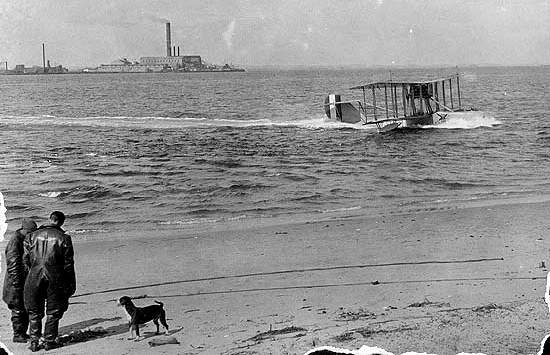
#9.  Gustav Kobbe (musicologist) famous for The Complete Opera Book, had a favorite hobby of sailing.  On July 27, 1918, he was sailing in a small boat in the Great South Bay by Long Island, NY and was hit by a landing seaplane.  He was killed instantly.  Keep in mind that the odds of dying in this manner are incredibly slim by today's standards, and imagine how much more rare that would be in 1918.  The seaplane was only invented in 1905.  He was amazingly unlucky!


#8.  Taylor Mitchell (singer) famous as being an award-winning solo Canadian folk singer, went hiking on October 27, 2009 in a Canadian National Park in Nova Scotia, where she would be attacked by two coyotes.  Two hikers arrived at the scene and called emergency officials.  She was flown by helicopter to the nearest hospital, but died overnight.  She is only the second person ever recorded as being killed by coyotes (the only other fatality being a 3 year-old from Oregon in 1981).


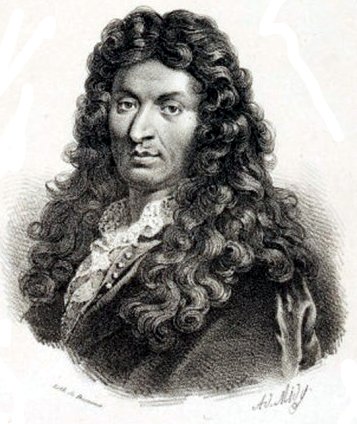
#7.  Jean-Baptiste Lully (composer) was arguably the most important, influential, and famous composer of the 17th century.  He was the court composer for the infamous French enlightened despot, King Louis XIV.  On January 8, 1687, Lully was conducting a Te Deum (a Catholic hymn usually written to celebrate an event) celebrating the King's recovery from an illness (I guess "Get Well" balloons aren't enough for some people!).  While conducting, Lully stabbed himself in the toe with his baton - in those days, batons were giant staffs like a drum major in a band uses.  He subsequently acquired gangrene because he refused to have his toe amputated and he died on March 22nd, thereby ending one of the greatest careers in music history.


Second Viennese School Composers: Arnold Schoenberg, Alban Berg, and Anton Webern - The Second Viennese school was known for inventing Serialism, a style of composition that involves using a mathematical system to essentially write the music for a given piece.  These three are arguably the most influential composers of modern music.  Their reputation is not that great among most audiences who have had to cringe at a horrid cacophony of random screeches and blips, but they were actually very talented and intelligent.  Their music was shocking to most musicians of their time, and their deaths were equally bizarre. 

#6 Arnold Schoenberg, the inventor of Serialism, significantly suffered from triskaidekaphobia (the fear of the number 13).  He purposefully misspelled and changed the name to his most famous opera Moses und Aaron to Moses und Aron because the former has 13 letters, and there are many, many other examples of his paranoia.  Having been born on September 13, he was paranoid throughout his life that he would die in a year that was a multiple of 13.  And so on his 76th birthday, he was very anxious when his astrologer wrote him an note saying that this would be a "critical year (7 + 6 = 13)".  Schoenberg was very upset because he had only considered multiples of 13 and not other associations with the number 13.  Appropriately, Schoenberg died on Friday, July 13, of that year (1951) knowing full well his apparent and ironic fate.

#5 Anton Webern, was sitting on his porch after curfew on September 15, 1945 near the end of World War II, when American soldiers approached his house.  They were there to arrest Webern's son for selling items on the black market.  One American entered and arrested his son without incident, while Webern, shocked and anxious, lit a cigar at the same moment that his arrested son with the American exited the house.  This startled the American, who instinctively, after seeing the glow of the match, mistook it for a flash from a pistol.  The scared American, without thought, fired in the direction of the light and killed Webern at the age of 61.

#4 Alban Berg, unfortunately living in squalor and poverty, was stung by a bee in Vienna, Austria in 1935.  This developed a large carbuncle on his back.  Because of their living conditions, he refused to go to a hospital and instead had his wife perform an operation to clear the dead skin using a pair of scissors.  Berg contracted blood poisoning and died on Christmas Eve at the age of 50.


#3 Grigori Rasputin (Russian Orthodox Monk) arguably caused the eventual fall of the Russian Tzars that lead to the Bolshevik Revolution in the early 20th century.  Rasputin has been the figure for many songs and operas over the last 100 years.  His death was astoundingly complicated and gruesome - perfect fodder for opera composers.  He was a political evil among many Russians - he often spoke negatively against the Tzarist regime.  So, he was first stabbed by an ex-prostitute for the negative remarks, slicing his belly open allowing the intestines to fall out.  She ran away yelling "I have killed the antichrist!".  He, amazingly, survived this attack.  Shortly after his recovery, he was lured by several Princes to a cellar where he ate bread laced with cyanide and drank wine also laced with cyanide.  He consumed five times the lethal dose, before he vomited it all up because of excessive heart burn, and survived the attempted murder.  Minutes later, the Prince, after seeing his survival, shot him in the back.  Rasputin fell forward and the Prince and his friends left.  One returned shortly after to retrieve a coat he left and found Rasputin there, wounded but alive.  Rasputin got up and attempted to strangle him, but the rest of the group, hearing the struggle, returned only to shoot Rasputin three more times.  He fell to ground, shockingly still alive, Rasputin would then be clubbed, beaten into submission, bound in cloth, and thrown into a river (still alive).  His body was recovered and upon an autopsy it was determined that he in fact died (amazingly) by drowning.


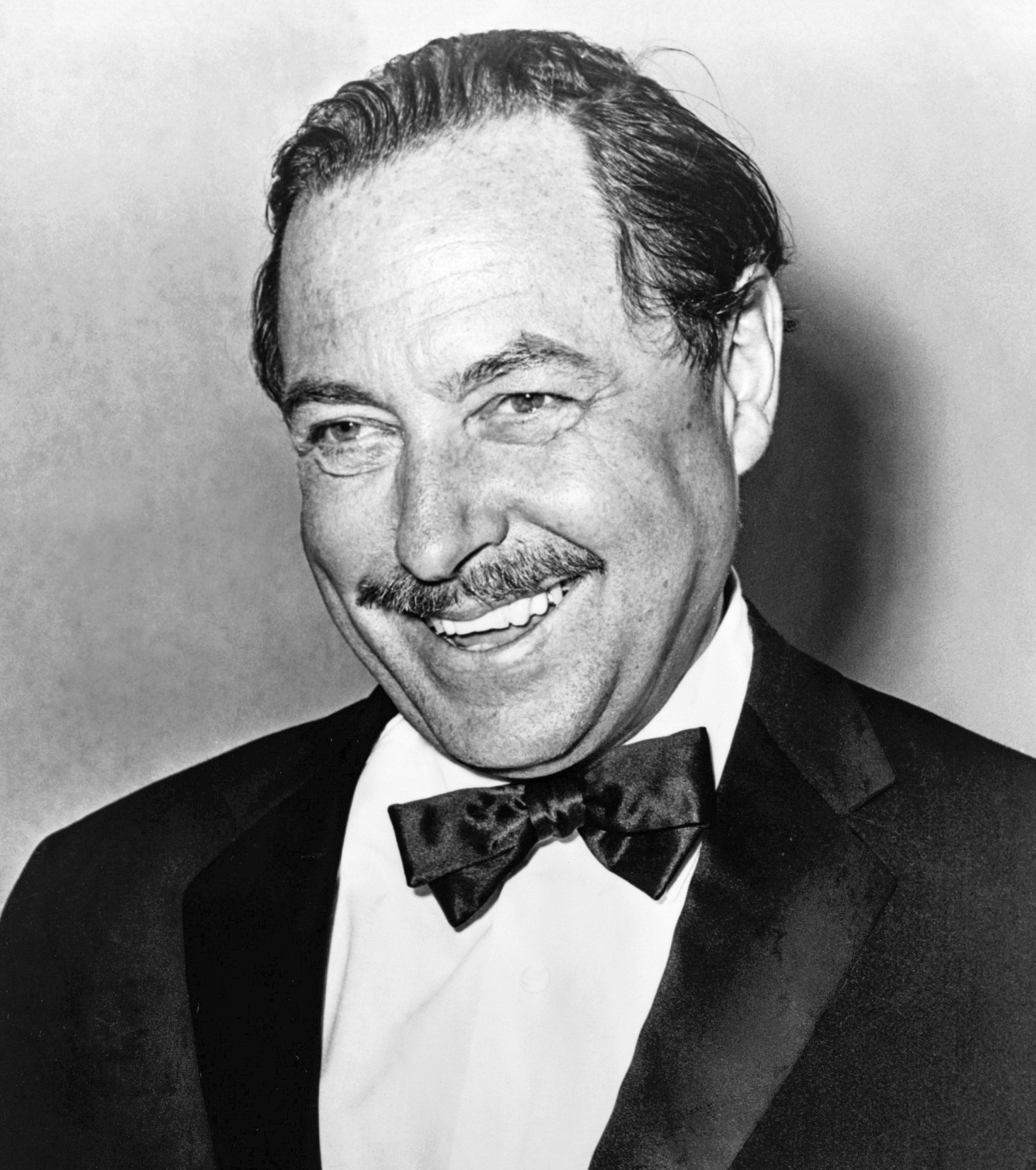
#2 Tennesse Williams (librettist) famous for many plays, subsequently turned into operas, including Cat on a Hot Tin Roof and Streetcar Named Desire, had a significant drug and alcohol problem.  Because of this, several bodily functions failed to work correctly for him.  On February 25, 1983, Williams put eye drops in his eye, as he did often, and in typical fashion, unscrewed the cap, and placed it between his teeth, tilted his head back to place the drops in his eyes, and accidentally inhaled the cap, choking to death at the age of 71.  His intoxication at the time kept his gag reflex from working correctly.


#1 Gyorgy Dozsa (leader of a Hungarian peasants' revolt) is the protagonist of several operas, the most famous being by Erkel, led tens of thousands of peasants in battle against the King of Hungary.  He was not successful, and had a completely ridiculously-awful death on July 20, 1514 - one that makes for a good opera evidently.  Because he was mocked for wanting to dethrone the King, thereby making himself the ruler of Hungary, his captors had him sit on an iron throne, heated by fire until it was glowing, after (obviously) making him hold a red-hot iron scepter and after placing a red-hot iron crown on his head.  But, that wasn't enough entertainment for his captors, as he sat, literally cooking away, one of the soldiers stabbed him with an iron pick, charring his skin and the wound.  Then they brought nine of his compatriots in front of him, which they had starved for a week, and told them to eat the flesh off of the wound.  The first, Dozsa's brother, did not, and was decapitated in front of the dying Dozsa.  The others, afraid of their fate, and starving, ate off of Dozsa, who eventually died from the torture.  I can't believe people have made this story into an opera - sickos! 


I make lists all the time, but here are two favorites:

Featured Post

OLYMPIC CEREMONY DATABASE: Every Summer and Winter Olympic Opening Ceremony

The opening ceremony of the Olympic Games may be the largest art form in the modern world and certainly one of the rarest.  I provided all ...